
YouTube Automation: Building Faceless Channels That Generate Ad Revenue Without Showing Your Face
Published: March 15, 2025 | Reading Time: 8 minutes | Category: Digital Entrepreneurship
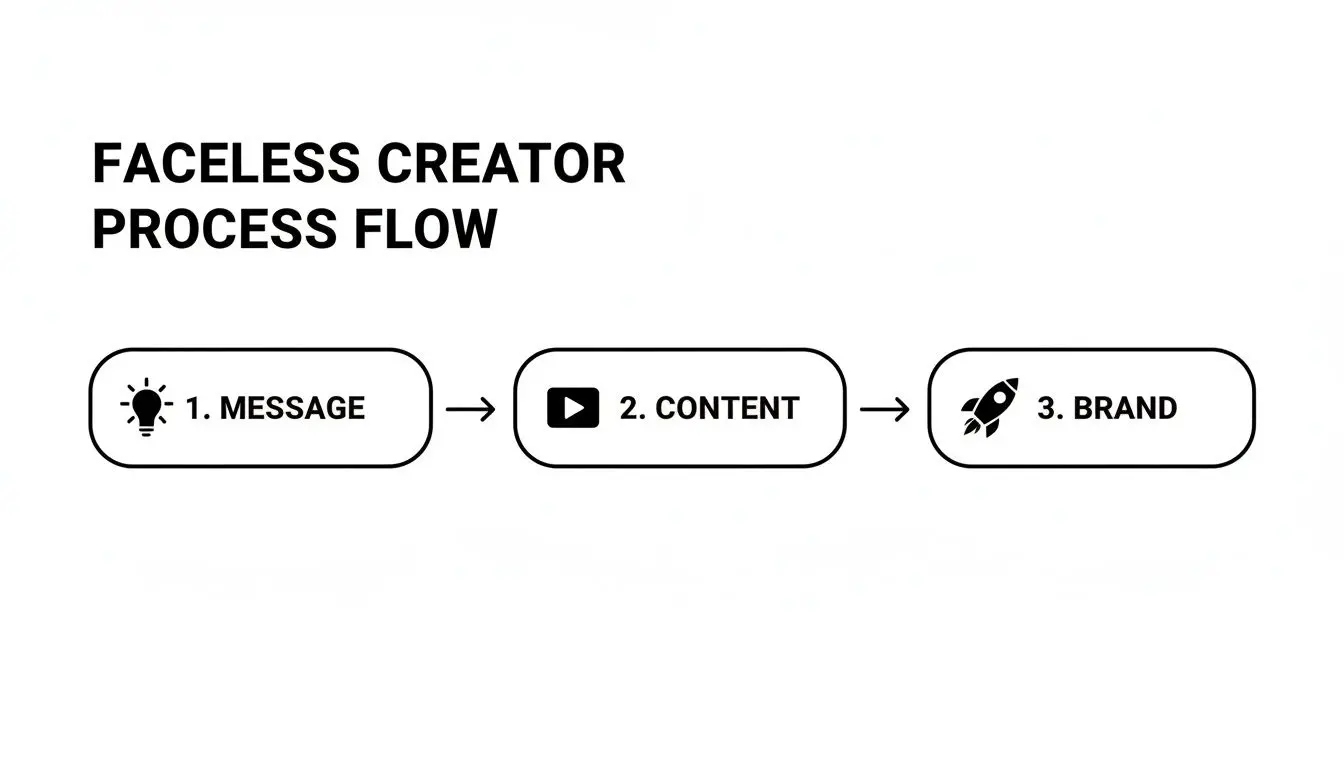
The creator economy has evolved. In 2025, faceless YouTube channels represent 38% of all new monetization ventures—up from just 12% three years ago [^4^]. This isn't about low-effort spam; it's about building scalable media assets that generate passive income while maintaining your privacy. Whether you're camera-shy, value anonymity, or simply want to build a content empire without personal branding, YouTube automation offers a legitimate path to six-figure revenue.
Table of Contents
What Is YouTube Automation?
YouTube automation is the systematic creation of video content without appearing on camera, using a combination of AI tools, stock footage, voiceovers, and streamlined workflows. Unlike traditional creator channels dependent on personality, faceless channels function as digital media companies—scalable, sellable, and operationally efficient.
The model works because it removes the "personality bottleneck" [^4^]. Traditional creators spend 6+ hours per video on setup, filming, and personal preparation. Faceless creators cut production time by 80%, transforming a 5-hour workflow into a 45-minute sprint using AI scriptwriting, stock visuals, and synthetic voiceovers.
Revenue Potential: Real Numbers
Let's address the critical question: How much can you actually earn? The answer depends on your niche, audience geography, and content format. YouTube operates on a revenue-sharing model where creators receive 55% of ad revenue, with the platform retaining 45%.
According to recent data, average YouTube CPM (cost per thousand impressions) ranges from $13.03 to $15.34, with creator RPM (revenue per mille) typically falling between $5-7 per 1,000 monetized views [^2^]. However, finance and technology niches command significantly higher rates, with RPMs reaching $10-25 due to intense advertiser competition [^6^].
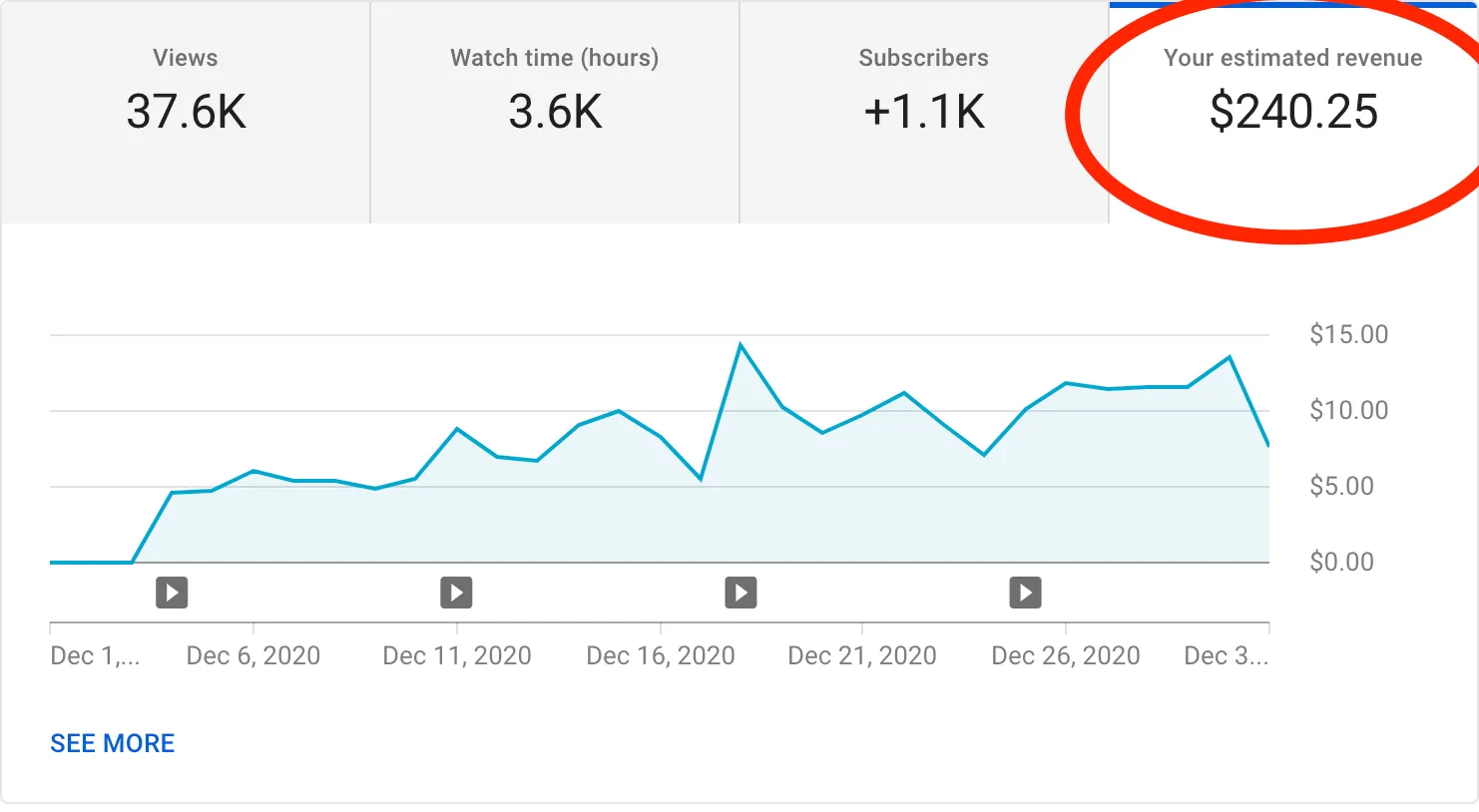
Monthly Earnings Breakdown by Channel Stage
| Timeline | Subscriber Count | Monthly Earnings | Key Milestones |
|---|---|---|---|
| Months 1-3 | 0-500 | $0 (Pre-revenue) | Building content library, testing formats |
| Months 4-6 | 500-1,000 | $0-$200 | Approaching monetization threshold |
| Months 6-12 | 1,000-10,000 | $50-$5,000 | Monetization activated, evergreen content compounding |
| Months 12-18 | 10,000-50,000 | $500-$15,000 | Multiple revenue streams, affiliate integration |
| 18+ Months | 50,000+ | $2,500-$50,000+ | Scalable media asset, potential acquisition target |
Note: These figures represent realistic expectations for well-executed channels in mid-to-high RPM niches. Approximately 97% of YouTube channels have fewer than 1,000 subscribers, and only 2.6% qualify for the YouTube Partner Program [^1^]. Success requires consistent execution and strategic niche selection.
High-CPM Niches for 2025
Not all content is created equal. Advertiser demand varies dramatically by niche, directly impacting your RPM. Selecting the right niche is the single most important decision for maximizing AdSense revenue.
| Niche | Average RPM | Content Format | Competition Level |
|---|---|---|---|
| Personal Finance & Investing | $10-$15 | Stock analysis, crypto explainers, budgeting guides | High |
| Technology & AI Tools | $9-$14 | Software reviews, AI tutorials, tech comparisons | Medium-High |
| Business & Entrepreneurship | $8-$13 | Case studies, startup breakdowns, marketing strategies | Medium |
| True Crime & Mystery | $8-$13 | Narrated investigations, unsolved cases | High |
| Educational & Documentary | $7-$12 | History explainers, science communication | Medium |
| Health & Wellness | $6-$10 | Mental health, fitness science, nutrition | High |
The Automation Production Stack
Modern faceless channels rely on a technology stack that automates repetitive tasks while preserving creative quality. Here's the essential toolkit for 2025:
Content Creation Workflow
- Research & Scripting: Use ChatGPT, Jasper AI, or WriteSonic to generate outlines and scripts. Focus on SEO-optimized titles and high-retention hooks.
- Voiceover: ElevenLabs, Murf AI, or Resemble AI provide natural-sounding narration. You must disclose AI-generated content in descriptions per YouTube guidelines [^1^].
- Visual Assets: Stock footage (Storyblocks, Artgrid), AI image generation (Midjourney, DALL-E 3), and motion graphics (Canva, After Effects).
- Editing: DaVinci Resolve (free) or Adobe Premiere Pro. AI tools like Pictory or InVideo accelerate assembly.
- Optimization: TubeBuddy or VidIQ for keyword research, thumbnail A/B testing, and competitor analysis.
Time Investment Reality
Despite automation, faceless channels require significant effort. Expect to invest:
- Research & Scripting: 2-4 hours per video
- Editing & Post-Production: 2-3 hours per video
- Thumbnails & SEO: 1-2 hours per video
- Community Management: 30-60 minutes daily
Successful creators batch content into 2-3 day sprints, producing multiple videos simultaneously to maintain consistent publishing schedules [^3^].
Monetization Timeline & Expectations
YouTube's Partner Program requires 1,000 subscribers and 4,000 watch hours (or 10 million Shorts views) for monetization eligibility. Here's the realistic progression:
The 90-Day Sprint Strategy
While overnight success is rare, accelerated growth is possible. Scott Smith, who runs 22 faceless channels generating $200,000+ monthly, launched a new channel in March 2025 that reached $36,000 in revenue within 90 days—ultimately scaling to $193,000 total with daily earnings of $800-$1,000 [^8^]. His approach emphasizes:
- Treating the channel as a company, not a side hustle
- Systems and team management over random uploads
- Immediate focus on high-retention storytelling
- Strategic outsourcing while maintaining quality control
Optimizing for Google Search Visibility
To rank professionally in Google Search, understanding the three-stage process is essential. Google Search operates through Crawling (Googlebot discovers and fetches pages), Indexing (content analysis and canonical determination), and Serving (returning relevant results based on hundreds of factors including location, language, and device) [Memory: Google Search Process].
For your YouTube automation content to surface in search results:
| SEO Element | Best Practice | Impact on Visibility |
|---|---|---|
| Video Titles | Include primary keywords within first 60 characters; use numbers and power words | High - Directly affects click-through rate |
| Descriptions | 2,000+ character keyword-rich descriptions with timestamps and links | High - Helps Google understand context |
| Thumbnails | High contrast, readable text (3-4 words), emotional faces or curiosity gaps | Critical - Determines CTR |
| Transcripts | Upload SRT files or enable auto-captions for indexable text content | Medium - Provides crawlable content |
| Engagement Signals | Encourage comments and watch time within first 24 hours | High - YouTube ranking factor |
Important: Google doesn't accept payment for crawling or ranking. No guarantee of indexing exists even when following guidelines. Ensure your content is high-quality, relevant, and technically accessible (no robots.txt blocking, proper meta tags, functional server responses) [Memory: Google Search Guidelines].
Success Stories: From Zero to $800/Day
Real-world examples demonstrate the model's viability when executed correctly:
Case Study 1: The 90-Day Challenge
A faceless tech explainer channel launched in March 2025 posted weekly 10-minute videos analyzing AI tools. By leveraging trending keywords and consistent publishing, the channel reached 138,000 subscribers and 32 million views within months, generating $800-$1,000 daily through AdSense alone [^8^].
Case Study 2: The Shorts Strategy
YouTube Shorts has become the ultimate top-of-funnel tool, reaching 200 billion daily views as of 2025. While Shorts RPMs are lower ($0.01-$0.13), they serve as loss leaders to drive traffic to high-margin long-form content. One creator used daily Shorts to hit 10,000 subscribers in 8 weeks, then monetized through affiliate links and digital products [^4^][^6^].
Case Study 3: Multi-Channel Empire
Noah Morris operates 18 faceless channels with 2.5 million subscribers, generating over $5 million annually. His strategy involves running 2-5 channels simultaneously using repeatable workflows, outsourcing editing and thumbnails, and maintaining strict quality control while delegating production tasks [^5^].
Getting Started: 90-Day Action Plan
Ready to launch? Follow this systematic approach to build your faceless channel foundation:
Phase 1: Foundation (Days 1-30)
- Select a high-CPM niche aligned with your interests or expertise
- Set up channel branding (logo, banner, description) using Canva
- Research 50 video ideas using TubeBuddy and Google Trends
- Create your first 10 videos, focusing on quality over quantity
- Establish posting schedule (3-5 videos per week minimum)
Phase 2: Optimization (Days 31-60)
- Analyze retention graphs in YouTube Analytics; identify drop-off points
- A/B test thumbnails and titles for CTR improvement
- Begin cross-posting to Shorts and TikTok for funnel building
- Engage with comments to boost algorithmic signals
- Outsource editing or scripting to freelancers (Fiverr, Upwork)
Phase 3: Monetization (Days 61-90)
- Apply for YouTube Partner Program upon reaching thresholds
- Integrate affiliate links in descriptions (high-ticket software/tools)
- Develop digital products (ebooks, courses, templates)
- Plan content calendar around seasonal CPM fluctuations
- Evaluate performance; double down on top-performing formats
Start Building Your Automated Income Stream Today
YouTube automation isn't a get-rich-quick scheme—it's a scalable business model requiring strategic execution. With the right niche, consistent publishing, and quality standards that meet YouTube's evolving guidelines, you can build a faceless channel that generates passive revenue for years.
The opportunity is real. The tools are accessible. The time to start is now.
Essential Resources
- YouTube Creator Academy - Official monetization guidelines and best practices
- YouTube Partner Program Overview - Eligibility requirements and policies
- TubeBuddy - SEO and analytics tool for channel optimization
- ElevenLabs - Professional AI voiceover technology
If you don't understand, leave a comment